Year: 2021

  • A Plan B for Immigration Reform

    By: Jorge Ramos
    New York Times

    MIAMI — It was 5 a.m. on Jan. 20. Joe Biden and Kamala Harris hadn’t even been sworn in, and yet the incoming administration had just published its plan for an ambitious immigration reform bill. Mr. Biden was fulfilling his pledge to send to Congress, within his first 100 days as president, a bill that would give the nation’s nearly 11 million undocumented immigrants a road map to citizenship.

    But for Latinos, who make up roughly half of America’s overall immigrant population, the fear is that the Biden-Harris plan will turn out to be yet another false hope.

    We’ve seen many immigration reform efforts fail in recent years. In 2005, Senator John McCain sponsored a bill with bipartisan support that included provisions for the legalization of undocumented people, but it went nowhere. In 2006, Congress was unable to come to an agreement on the different immigration reform bills passed in the Senate and the House.

    Another reform plan was discussed in the Senate in 2007, but never voted on. In 2013, the Senate passed a major immigration bill, heavily supported by a bipartisan group of senators known as the Gang of Eight, but John Boehner, the Republican speaker of the House at the time, cruelly blocked the bill from ever coming to a vote.

    The last time a significant immigration reform package was passed was in 1986, under Ronald Reagan. Three million undocumented people received what at the time was called “amnesty.” But the bill failed to both integrate these immigrants into American society and stop millions more from coming in.

    Undocumented immigrants living in the United States create jobs and pay over $11 billion a year in state and local taxes. These immigrants, including the so-called Dreamers, are full-fledged Americans, even though they don’t have the official documents to prove it. That’s why protecting them is so important.

    President Biden’s new proposal allows undocumented people to apply for green cards after five years, as long as they pay their taxes and pass criminal and national-security background checks. After three more years, those who demonstrate knowledge of English and meet other requirements can apply to become citizens.

    “This is the most wide-ranging plan I’ve seen in the many years I’ve been fighting for immigration reform,” Senator Bob Menendez told me in a recent interview. He expects to introduce the proposal in the Senate in the next few weeks.

    Which is precisely when all hope will be lost.

    While the Biden-Harris bill should be able to pass the Democratic-led House, in such a polarized country, it will be almost impossible for the 50 Senate Democrats to find 10 Republicans willing to help them overcome the filibuster and pass a bill on a controversial topic like immigration.

    Even if Democrats manage to eliminate the filibuster and get their immigration reform bill passed with a simple majority, problems will still emerge.

    So, what is our Plan B?

    “Right now, Democrats have the slimmest of majorities,” Frank Sharry, the founder and executive director of the immigrant advocacy organization America’s Voice, told me. “Let’s be realistic. The G.O.P. is now the party of Trump, power, plutocracy and racism.”

    Mr. Sharry thinks that “Democrats will have to go it alone if they want to produce change that changes lives,” and that if the Biden-Harris bill can’t pass Congress now, a new legislative strategy should be adopted to secure a win for America’s undocumented immigrants, even a partial one.

    “We are absolutely committed to a path to citizenship for the 11 million,” Lorella Praeli, the president of the progressive advocacy group Community Change Action, who earlier in her career worked as an activist for undocumented immigrants in Connecticut, wrote to me in an email. “But we’re pivoting from the all-or-nothing approach that hasn’t worked in the past.”

    Instead of trying to get the 60 votes needed to pass a comprehensive immigration reform bill, Ms. Praeli says, Democrats should seek to use budget reconciliation — a procedure that allows certain spending measures and programs to pass the Senate by a simple majority — to legalize “as many people as possible,” including essential workers, Dreamers, farmworkers and those immigrants who have been granted temporary protected status by the government.

    This strategy is somewhat similar to the one that in 2012 resulted in the DACA program, which today protects approximately 700,000 undocumented people, known as Dreamers, from deportation, allowing them to work in the United States legally.

    When the Dreamers, young people who were brought to the United States illegally by their parents, realized that Congress wouldn’t support the legalization of their status, they put major pressure on President Barack Obama to protect them with an executive action that is still in effect today. DACA completely changed their lives.

    A Plan B for immigration reform should seek the same goals: Legalize or protect as many immigrants as possible until Democrats can secure enough votes in Congress to pass a comprehensive reform bill. This is not the ideal solution, but this is where we are.

    The pandemic has revealed just how much immigrants — both documented and undocumented — contribute to the well-being of the United States, whether through their scientific contributions or through the care they provide to Covid-19 patients and their willingness to take on often-perilous cleaning jobs. While millions of Americans have been able to work safely from home, migrant farmhands have continued to sow and harvest the crops we eat.

    Fortunately, it’s clear that increasing numbers of Americans recognize the value of these contributions: According to Gallup, 34 percent would prefer to see more, not less, immigrants in this country — the largest support for expanding immigration that Gallup has recorded since 1965.

    It’s important not to admit defeat on immigration reform before we even start fighting. Plan A is to try to get the 60 Senate votes necessary to legalize all of America’s 11 million undocumented immigrants. Failing that, we must explore other options, such as those proposed by Ms. Praeli and Mr. Sharry — and proceed toward full legalization in steps.

    As the well-known Latin American saying goes: “Poco a poquito, se llena el jarrito.” Drop by drop, we can fill the pot.

  • PSWs still moving between high-risk care settings

    By: Vjosa Isai, Local Journalism Initiative Reporter, The Pointer
    The directive could not have been more clear: To keep Ontario’s most vulnerable safe, personal support workers can not be allowed to move between long-term care settings, spreading the novel coronavirus from one group of seniors to another.
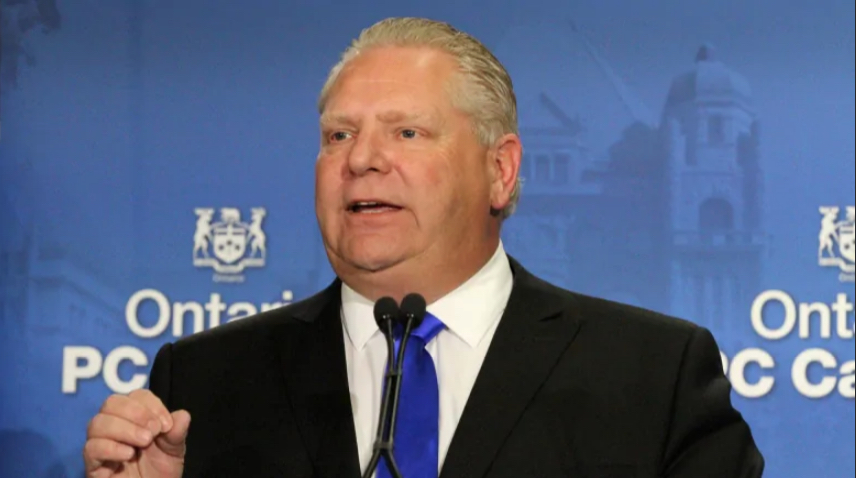
    Ontario Premier Doug Ford issued an emergency order in April preventing employees from working at multiple long-term care facilities. “We’re dealing with a wildfire at our long-term care homes right now,” Ford said at the time.
    A month earlier, at the start of the pandemic, the provincial government had issued official “guidance” for the long-term care and retirement sector that “employers should work with employees to limit the number of different work locations that employees are working at, to minimize risk to patients of exposure to COVID-19.”
    Fast forward to last week and the ongoing problems in the sector, which continues to put Ontario’s most vulnerable residents at risk that is avoidable.
    “Again, here we are, we’re short staffed and you’ve got personal support workers who are in high demand, moving from community to homes, and it’s the opposite of what we should be doing to control this,” union head Sharleen Stewart said.
    Despite the warnings, recent reports indicate some agencies are dispatching home-care PSWs into higher-risk environments.
    “It’s been extremely inequitable. Poorly managed from the beginning,” said Stewart, president of the SEIU Healthcare union, which represents over 60,000 frontline healthcare workers across Canada, more than 25,000 of which are PSWs.
    In April, the provincial government issued a regulation limiting workers to a single long-term care service provider or home, but apparently this does not apply to other care settings. The regulation states that employees of a long-term care provider cannot also attend work in other long-term care homes, by another health service provider, or at another retirement home. However, it does not expressly prohibit work in other care settings, including in developmental services care or home care.
    In an email response to The Pointer a spokesperson for the Ontario health ministry did not specify that PSWs are required to only attend one care setting or restrict their work just to home care.
    Nearly a year into the pandemic, and despite repeated calls to limit the movement of those workers who can easily transmit the virus to the most vulnerable, the Ford PC government, continues to ignore the issue, critics say.
    “No, it should not be happening. Right now, PSWs that work in long-term care can only work in long-term care,” said Miranda Ferrier, Ontario Personal Support Workers Association president. The OPSWA has been advocating to regulate the profession for years, and says some of the added protections for PSWs during the pandemic will amount to “Band-Aid fixes” if they are not made permanent.
    A lack of PSW staff across the sector continues to put seniors at risk, even with the current vaccine rollout for those in long-term care and other arrangements involving support staff for the elderly.
    Stewart said she had spoken to the health and long-term care ministers about concerns related to PSWs staffing last March, pointing to the response from other provinces, including Quebec, which started a campaign in June to hire more than 10,000 PSWs.
    In addition to separating long-term care and community PSWs to their respective settings during the pandemic, Stewart said the union advocated for additional infection prevention measures such as “cohorting” staff, including community PSWs in the priority vaccination plan, better wages, and providing adequate PPE.
    According to the Peel Public Health pandemic dashboard, 67 percent of deaths due to COVID-19 – or 382 of the Region’s 571 deaths – occurred among long-term care or retirement home residents as of January 31. The median age of deaths is 85. The health unit’s reporting notes that Peel community transmission in November and December led to increased cases in long-term care and retirement settings. Since the January 14 emergency stay-at-home order, new cases of infection in Peel reached a plateau and are beginning to decline, though outbreaks in Peel nursing homes continue to be declared.
    Some of the most deadly include an outbreak at Camilla Care Community, in Mississauga, where 188 residents and 55 staff contracted the virus, and 72 residents died. The province temporarily appointed Trillium Health Partners as the manager of the facility in May. The outbreak lasted between March 26 and June 27, though another outbreak was declared on January 14, with six staff contracting the virus as of January 28. By February 1, one more Camilla resident was added to the case count.
    A June report by Trillium documented horrific conditions at the home, including poor leadership, a lack of personal protective equipment (PPE), and absence of infection control practises. Understaffing resulted in minimal care provision, with reports of residents left in their soiled clothing or being force-fed to rush to the next client, with meal service sometimes taking up to three hours to complete. Camilla Care is now facing a $25 million class action lawsuit by residents and their families.
    In August, the Canadian Armed Forces released what Premier Doug Ford called a “heart-wrenching report” documenting the neglect, understaffing and poor infection control practises seen across seven long-term care facilities they attended to provide emergency support between April and July, including at Brampton’s Grace Manor.
    According to the Ministry of Health’s latest guidance document for home and community care, enhanced droplet and contact precautions are required when visiting a patient suspected to have COVID-19. This means wearing gloves, a gown, surgical mask and a face shield or goggles, according to the September 17 document.
    In an email to The Pointer, a Ministry of Health spokesperson said care providers are asked to use surgical masks “during the entirety of a home and long-term care visit,” but did not specify whether PSWs were recommended to restrict their work to one setting.
    The Ontario Personal Support Workers Association received a complaint in January from a Hamilton family regarding a homecare visit by a PSW who was apparently dispatched to a higher risk setting, said Ferrier.
    “If we don’t have a solid foundation to grow from, we can’t make those changes in legislation and policies and procedures that will bring about the full-time work, that will bring about a better wage…and it will give them the professional recognition they deserve,” she said.
    The Broadbent Institute, a think-tank founded by former federal NDP leader Ed Broadbent, applauded British Columbia’s “swift response” to address the challenges in long-term care that have continued to plague Ontario.
    Just prior to the pandemic declaration last March, BC Seniors Advocate Isobel Mackenzie issued a report that found for-profit entities spend $10,000 less per year, per resident, compared to the non-profit long-term care sector. After a devastating COVID-19 outbreak at Lynn Valley care home, where 20 residents died, the government went on a hiring blitz to appropriately allocate staff, place them in one facility to minimize spread, and improve pay and job protections.
    Ontario has been slow to respond to some of these successful strategies adopted by other provinces. It prompted a coalition of more than 300 physicians and advocates to form Doctors for Justice in LTC, and release an open letter with nine action items it demands from the government to keep seniors safe.
    The group is calling for an end to the use of agency workers in multiple facilities, said Vivian Stamatopoulos, an associate teaching professor at Ontario Tech and a researcher on long-term care outbreaks.
    “We need to have properly staffed facilities, and individuals who have full-time, permanent contracts so that they don’t have to take on multiple contract positions – either in home care, or different long-term care facilities – where they, unfortunately, can transmit the virus,” she said. Intimidation tactics, such as threatening workers with professional reprisal for speaking out, and lawsuit threats and trespassing orders against family members, are part of the system that keeps these workers and their families vulnerable, she said.
    “This is a very troubled and fractured system that needs to be overhauled.”
    Some of these recommendations are reflected in findings by Ontario’s Long-Term Care COVID-19 Commission, which has released two interim reports since its July 2020 launch, and is expected to submit its findings by April 30. (The Commission asked for an extension to December for its report, due to the “significant delays in obtaining government information central to the Commission’s investigation,” but the request was denied by Long-Term Care Minister Merrilee Fullerton.)
    The first of five interim recommendations made in late October was to increase staffing of PSWs and ensure that support workers recruited were able to meet the “complex care needs” of residents.
    Peel long-term care homes – namely, Erin Mills Lodge Nursing Home and Cooksville Care Centre in Mississauga, and Grace Manor in Brampton – experienced brutal outbreaks during the first wave.
    Currently, Extendicare Mississauga is battling an outbreak, declared on December 18, that has killed 11 people of the 46 who contracted the virus, with more than two-dozen staff testing positive for the virus. On December 29, Tullamore Care Community in Brampton also declared an outbreak, where 92 residents and 46 staff were sick, with seven resident deaths. The Peel long-term care outbreaks declared since this January have affected a maximum of seven residents and six staff per home.
    The risk of COVID-19 spreading into, and out of, long-term care settings has become more pronounced as Peel announced its first confirmed case of the South African variant of COVID-19 last week. The Mississauga man who contracted the virus had not travelled, Peel Public Health said in a statement. The Region has also identified six cases of the U.K. variant.
    An outbreak of this variant at Roberta Place Long Term Care in Barrie has killed 63 residents, about half of the 128 who contracted COVID-19. York Region also confirmed 39 cases of the U.K. variant last week
    Dr. Adalsteinn Brown, co-chair of the Ontario Science Table, said COVID-19 variants are expected to become the dominant version of the virus by March.
    Care staff and PSWs in long-term care homes are screened twice daily, including temperature checks, and are required to be tested for the virus every week, said Rob McMahon, a spokesperson for the Ministry of Long-Term Care, in a statement to The Pointer. Rapid COVID-19 tests have been deployed to long-term care homes during the second wave to facilitate the early detection of outbreaks.
     

  • Ontario Extend Off-Peak Electricity Rates

    By: Laura Steiner
    The province of Ontario is extending its off-peak electricity rate until February 22, 2021.  The off-peak rate of 8.5 cents/ kilowatt hour will apply 24 hours a day for all Time-Of-Use and tired customers.
    “We know staying at home means using more electricity during the day when electricity prices are higher, that’s why we are once again extend the off-peak electricity rate to provide households, small business and farms with stable and predictable electricity bills when they need it the most,” Minster of Energy, Northern Development and Mines Greg Rickford said.  The off-peak rate has been in place since January 1, 2021, and will have been in place 53 days by the time it ends February 22.
    Ontario has announced its gradual reopening.  Effective today, three Public Health Units (PHUs) will have returned to the green zone under the provincial framework.  28 more will enter the colour-coded classifications February 16 including Halton.  The remaining hotspots of Peel, Toronto, and York are expected to reopen effective February 22, 2021.

  • Supporting Future Lawyers to Tackle Racism in Canada

    By: Fabian Dawson, Local Journalism Initiative Reporter, New Canadian Media
    In a Canadian first, one of the country’s largest banks has announced a scholarship program to increase the number of students pursuing a career in the legal profession with the intent to become advocates for anti-racism.
    Scholarship recipients for the Scotiabank Program for Law Students will be selected based on several factors including their “demonstrated experience in anti-racism advocacy and a clear articulation of how they will leverage their legal careers to tackle systemic discrimination,” the bank said in its press release.
    Participating law schools are: University of Alberta, University of Victoria, McGill University, University of Windsor, the Schulich School of Law at Dalhousie University and Osgoode Hall Law School at York University.
    “Like banking, the legal profession benefits enormously from the diverse perspectives of its members,” Brian Porter, President and CEO of Scotiabank, said as quoted in the press release. “The Scotiabank Program for Law Students endeavors to give the next generation of legal professionals a stronger voice and presence in furthering the fight against racial discrimination. We are confident that this first-in-Canada program will help create positive and lasting change for the benefit of all Canadians.”
    The Scotiabank Program for Law Students will enable each affiliated university to award one student per year a $10,000 scholarship renewable annually for the duration of their three-year degree. Each scholarship recipient will have the opportunity to meet with Scotiabank executives and members of the legal community, and select participants will be offered an internship opportunity at either Scotiabank, a law firm, or another legal advocacy organization.
    A total of $540,000 in scholarship funds will be awarded to 18 students throughout the duration of the program.
    In addition to the scholarship program, Scotiabank has also committed $60,000 over the next three years in support of Black Future Lawyers (BFL); a collaboration between the University of Toronto Faculty of Law, Black Law Students Association and members of the Black legal community.
    B.C. sees a slow shift
    The Law Society of British Columbia in a report on the demographics of the legal profession in the province said that between 2013 and 2019 there was an increase in the percentage of B.C. lawyers who identify with one of four diverse groups (Indigenous, visible minority, sexual orientation and identity, and persons with a disability).
    The largest shift can be seen in the growing percentage of lawyers who identify as a visible minority, person of colour or come from a racialized background, the society said.
    “While these are positive developments, the legal profession in B.C. still has a ways to go to reflect the diversity of the communities in which they live and work,” the report reads. “While just over 4.6 per cent of B.C.’s population is Indigenous (First Nations, Metis, or Inuit), Indigenous lawyers comprise  only 2.7 per cent of the B.C. bar.”
    “As encouraging as the increasing number of lawyers who identify as visible minorities, persons of colour, or racialized may be, in a province where visible minorities make up 28.8 per cent of the population, individuals from these same communities comprise only 16.15 per cent of the B.C. bar,” the society’s analysis of its membership showed.
    The Canadian Bar Association (CBA) is also calling on the federal government to appoint more Black, Indigenous, and People of Colour candidates to the Supreme Court and other federal judicial positions.
    “We have long called on the government of Canada to make judicial appointments that reflect the diversity of the Canadian population, and to consider membership in equality-seeking racial groups one of the many factors in the assessment of judicial candidates,” wrote CBA President Brad Regehr in a letter to Prime Minister Justin Trudeau.
    The letter admitted that the government modified the federal appointment system in 2016 to increase the diversity of judicial appointments, and started gathering and publishing self-identification data.
    “However, we are concerned that these commitments and changes have not resulted in an appreciably more diverse judiciary to date,” Regehr wrote. “Between 2016 and 2019, only three per cent of federal judicial appointees self-identified as Indigenous. With no race-disaggregated data, we do not know how many federal judicial appointees identified as Black, but only eight per cent identified as visible minorities.”

  • NWHL suspends season due to concerns regarding the COVID-19 pandemic

    By: Vincenzo Morello
    The National Women’s Hockey League (NWHL) has suspended its season due to positive COVID-19 tests and the resulting safety concerns.
    The league made the announcement in a tweet on Wednesday.
    “The NWHL and the Olympic Regional Development Authority (ORDA) have agreed, due to new positive COVID-19 tests and the resulting safety concerns for the players, their respective staff & the community that the remainder of the 2021 NWHL Season in Lake Placid have been suspended,” the tweet read.
    Before the season was suspended, two teams had already dropped out.
    Last week, the Metropolitan Riveters withdrew from the season after several members of the organization tested positive for COVID-19, and the Connecticut Whale withdrew on Monday.
    This year, all six NWHL teams were competing in a tournament-style regular season in a bubble in Lake Placid, New York.
    The playoffs were supposed to start today with the final being scheduled for Friday.
    The NWHL also did not crown a winner in 2020 due to the pandemic.

  • Milton Council Endorses New Land-use Vision Official Plan

    By: Laura Steiner
    Milton Council has taken its next steps towards a new official plan, also called “We Make Milton.”  They endorsed a vision statement, and guiding principles that will take the Town to the year 2051.
    The vision statement: “Milton 2051: Choice Shapes Us” is meant to reflect a move towards a modern land-use plan for the next 30 years.  “The new vision for our Official Plan reflects our growing community, provides choice for residents and makes Milton a Place of Possibility for all.  Choice will shape our community to the year 2051,” Mayor Gord Krantz said. Council’s endorsement marked the end of stage two.
    Three delegates spoke to the issue during the council meeting.  Zoha Maghar is a member of Sustainable Halton.  She raised concerns over how youth will be incorporated, and consulting with staff.  Retaining and supporting Milton’s youth came in number 45 on the list of top priorities.
    Usama Syed spoke to council on behalf of the Muslim Association of Milton (MAM).  He expressed concern that places of worship were being ignored during the process.  “Not all of our needs have been included,” he told council. Mayor Krantz echoed the sentiments saying “we do need to recognize the need for more places of worship as part of a complete community.” Places of worship came in as priority 31 on the list
    Wendy Roberts spoke on behalf of the Italian Canadian Club of Milton (ICCM) and raised issues over engagement of Indigenous Peoples, her concerns by councilors Kristina Tesser-Derksen, and Rick Di Lorenzo.  Staff answered that would be consulting with Indigenous Peoples.”  Indigenous Peoples will be part of stage three as Town Staff will work with Ontario’s Ministry of Indigenous Affairs to develop a consultation strategy.
    Stage three is expected to begin later this year focusing  on policy discussion, and include more opportunities for public input.    To read the entire report click here

  • The ‘Missing Link’ would deliver subway-style train service in Mississauga, so why won’t Queen’s Park or Ottawa step up?

    By: Isaac Callan, Local Journalism Initiative Reporter, Source: The Pointer
    In November, a group of politicians and bureaucrats gathered on Zoom, vying for credit as they announced good news. Using a superimposed background, they stood in front of a newly renovated Mississauga GO station in Cooksville.
    “I think today’s announcement shows we are committed to building the network for post-COVID when we are all able to get back to our normal activities,” Ontario Minister of Transport, Caroline Mulroney, said.
    The big reveal was a preview of the finished product after construction work that began in 2017. A three-year contract for the new station, awarded at $128.4 million, adds accessibility improvements, parking, indoor waiting areas and transit integration with the future Hurontario LRT.
    The station has been significantly improved, with beautiful streetscaping framing the new design. There is just one thing missing: regular and reliable train service.
    According to GO’s September 2020 schedule, just five trains on the Milton Line (the only commuter rail route the station services) stop through Cooksville in each direction daily. In the morning, between 6:32 a.m. and 8:59 a.m., five trains take passengers into Toronto from Cooksville and, between 3:40 p.m. and 7:10 p.m., another five trains leave Union Station to take the same passengers back. For the rest of the day, Cooksville GO train station only sees commuter buses passing through.
    It’s the same situation for the other five Mississauga GO stations on the Milton Line: Dixie, Erindale, Streetsville, Meadowvale and Lisgar. Instead of subway-style rail service that could feed local bus routes in each of these areas, the stations sit empty for most of the day because of the limited service, making it difficult to grow ridership throughout the day in these Mississauga burroughs, despite continued population growth. This forces dependence on cars when travelling to other parts of the GTA or even Mississauga outside the limited eastbound morning rail service and westbound service in the late afternoon and early evening.
    Go bus service in the 905 and beyond has long been a contentious issue. While smooth, spacious trains humming quietly along uninterrupted tracks draw hundreds of thousands out of their cars, just like other major commuter rail systems around the world, the use of noisy buses that have to compete for space on roadways dominated by other vehicles, is not a viable alternative for many who instead choose to continue climbing into their comfortable, climate-controlled automobiles.
    It’s a frustration for Mississauga. The lack of access to rail lines has been an unsolvable bottleneck for decades.
    A city with grand aspirations to become North America’s first ‘suburb’ to shed that label while growing into a major urban destination, has struggled to create a world class transit system.
    Some of the continent’s largest developments are transforming Mississauga, including the massive 37-tower Oxford Properties’ redevelopment of the downtown, the Rogers M City nine-tower project across from City Hall, and an entire corridor of towering developments along the city’s lakeshore, which will completely reshape the look and feel of the once sleepy bedroom community.
    The city will soon house a million residents, one of the largest urban centres in Canada.
    But standing in the way of Mississauga’s vision to become a cosmopolitan international destination for corporations and residents, is the lack of high order transit. The Hurontario LRT will be the first true piece of this type of transit infrastructure within the city, but it is just one north-south corridor set to end at Steeles Avenue, and the quietly rendered decision by the Province to dramatically reduce its frequency further limits its potential.
    A truly integrated commuter network to connect Mississauga with the entire GTHA region and other hubs such as Kitchener-Waterloo, which would drive private-sector investments, jobs and dynamic residential growth, remains a dream.
    Even with current trains going only in one direction for short periods of the day, Cooksville GO has some of the highest ridership in Peel. According to GO Transit figures collected between April and December 2019, Cooksville GO has an average of 2,800 daily riders. Those figures compare favourably to 2,700 daily riders at Port Credit GO, which is on the busy Lakeshore West Line and where trains run every 30 minutes all day and every 15 minutes at rush hour.
    A total of 5,000 daily riders frequent Clarkson GO station, illustrating just how well used the Milton Line could be if it shared Lakeshore West’s service levels.
    The decision to pour more than $100 million into redesigning the Cooksville GO station illustrates how Metrolinx and the Province have struggled to get away from GO Transit’s origins.
    When the service launched, in the 1960s, Ontario lived and died by the sprawl-inducing theory of suburban commuters. With highways filling up, GO trains offered a direct alternative, telling commuters to drive to stations instead of highways.
    As the years went by and theories of transit integration took priority, the network began to evolve and became more dynamic. In Toronto, in particular, heavy integration between streetcars, buses and other GO networks make it easy to use the train without a car, but in suburbia, there is still an assumption that many riders want to start and end their daily journey in a car. Instead of building GO stations with no parking lots and bus bays for local transit services to deliver passengers at their doorstep, the car is still prioritized in its service model and when hundreds of millions of dollars are invested in giant parking lots or above-ground structures, like the modern facility at Cooksville opened last year.
    Cooksville will be served by the multi-billion dollar Hurontario LRT by 2024 (assuming no delays) and a future Dundas Street bus rapid transit (BRT) route. Instead of putting its efforts into improving service on the Milton GO line or helping Mississauga to further integrate its rapid transit network, Metrolinx and the Province have pumped tens of millions into more parking.
    “Customers now have full access to the transformed Cooksville GO Station, complete with an integrated six-level parking structure that adds more than 750 new parking spaces for a total of over 2,500,” November’s media release boasts.
    For years, Mississauga Mayor Bonnie Crombie led a charge to ask the Province and Ottawa to put money into the transit line itself, not just its accessories.
    GO Transit’s sparse service on the Milton Line is due to Canadian Pacific (CP) Railway’s ownership of the track. As a result, Metrolinx is forced to negotiate access to the route, with lucrative cargo on freight trains given priority over city-building passenger transit. It also means crude oil and other potentially dangerous loads are dragged behind heavy locomotives through Meadowvale, Streetsville, Erindale, Cooksville, Dixie and the heart of Toronto.
    At the beginning of her first term as mayor, Crombie brought together a variety of stakeholders and created a business case to bring change.
    Called the ‘Missing Link’, it outlined how, for a cost at the time of around $10 billion, the federal and provincial governments could build a rail bypass near Highway 407 to send freight from Canadian National (CN) Rail (which owns part of the Kitchener Line) and CP across the top of Toronto, leaving the Kitchener and Milton Lines free to run GO trains to meet commuter demand. The costly move, if successful, would take the Milton Line from five trains per day to service every 15 minutes, if there was enough demand.
    “The vast majority of advocacy work had occurred between 2014 and 2018. And we thought we were so close,” Crombie told The Pointer. The mayor listed off meetings with the Prime Minister, Premier, MPs, MPPs, other cities and “any elected representatives” she met with as key opportunities she used to push the idea of a Missing Link.
    But, in 2018, the Liberals were booted from Queen’s Park as voters gave Doug Ford and his deficit-cutting agenda a stonking majority. Just over a year later, the Liberals in Ottawa found themselves heading a shaky minority government and seemed to have lost their appetite for the multi-billion-dollar rail plan.
    Concerned with the changing political landscape, advocacy was scaled back. The scythe Ford swung during his first year-and-a-half in office cared little for previous commitments. Electric car subsidies and commitments to protect ecosystems were just two of the many policies Ford moved away from.
    “My primary priority and concern was to ensure that the [Hurontario] LRT would remain funded,” Crombie said, citing the necessary funds for Ford’s pet project, the Ontario Line rail system, as a potential threat. “Did that compromise the LRT projects in Peel, in Mississauga and in Hamilton?”
    The Hamilton LRT was cut by Ford, while the length and frequency of the Hurontario LRT suffered too.
    With medians removed from Hurontario Street and a multi-billion dollar contract signed, Mississauga’s project looks safe in its current form. The City does need more money for its Dundas Bus Rapid Transit vision and Crombie remains cautious, saying the current administration in Queen’s Park just doesn’t seem to have the appetite for something as ambitious (and expensive) as the Missing Link.
    “The focus became a little more local, but notwithstanding that, the Missing Link… continues to be a priority for us,” she said. “We haven’t forgotten about it in the least.”
    Where the Ford government may not have demonstrated an appetite for big capital transit projects, it is busy pouring billions of dollars into another Peel Region transportation plan. The GTA West Corridor, restarted by Ford after it was scrapped in 2018, has a cost of $6 billion, based on 2012 numbers, and will tear through farmland and edge along and through parts of the Greenbelt if it is constructed.
    Also known as Highway 413, the project has been decried by environmental groups across Ontario. It threatens endangered species, habitats and watersheds in some of the GTA’s last remaining agricultural land.
    Despite its routing through a portion of Peel (up the western part of Brampton) and the level of funding attached to it, Mississauga has been relatively quiet on the project. It’s not our problem, has been the approach.
    “I mean [provincial leaders] have been very generous to Mississauga, I’m not denying that,” Crombie said. “Whether I could make the case that the money being spent on the GTA West Corridor would be better spent on public transit or to build the Missing Link, I would love to try, but I think they’re committed to the GTA West Corridor.”
    The role of MPs and MPPs in this advocacy and decision making picture is unclear.
    As locally elected representatives, all 12 Mississauga MPs and MPPs should be banging the drum aggressively for a project that would effectively bring subway-style service to their city. Despite being keen to show their faces at announcements, few have publicly demonstrated leadership on the file.
    “This is great news for Cooksville and for those who reside in the Mississauga area,” Kaleed Rasheed, PC MPP for Mississauga East–Cooksville, said when the new GO station opened. “With connections to the Milton train line and local transit, the redeveloped Cooksville GO will be a key transit hub and a base to travel across Peel, Halton and Toronto.”
    It is hard to justify how a station served by a total of 10 trains per day will be “a key transit hub” until frequency on the Milton Line is dramatically improved.
    Crombie is clearly caught in a challenging negotiating position.
    “We advocate to them, but at the end of the day, they make the decision on their priorities,” she said, pointing out that the parliamentary system in Canada favours party priorities over local needs. MPPs in Mississauga are Progressive Conservatives first and local champions second, while MPs are Liberals first and Mississaugans second. That’s just the way it is in today’s politics, she said.
    “Your leader sets the agenda and you work as a team to advance that agenda,” she said, drawing on her own experience as a former Liberal MP. “And, yes, we’ll brief them on our issues, so they do advocate — they do advocate, I know our MPs and MPPs advocate for our issues, I’ve heard them — but at the end of the day, the decisions are made at the cabinet table.”
    The one brightspot may be Omar Alghabra, the Mississauga Centre Liberal MP, recently elevated to the position of Minister of Transport. Crombie says that, in the short time since he took over the file, he has spoken to her on three separate occasions about the Milton Line and Missing Link.
    News from Metrolinx and the Province has not been positive. “Milton is a very important line for us and we’ve increased service about 30 percent over the last few years on the line,” Mulroney told The Pointer in November. “We are working towards two-way, all-day GO on core sections of the network.”
    Phil Verster, CEO of Metrolinx, was equally vague. Asked about two-way, all-day GO on the Milton Line he simply explained the situation with CP, referencing negotiations that would fit into plans that “stretch 10, 15, 20 years into the future.”
    Less than a fortnight later, on November 23, Verster cancelled a scheduled 30-minute interview with The Pointer, citing a busy calendar. Metrolinx did not offer to reschedule the interview when asked.
    The future of the Milton Line is unclear but its potential to elevate transit service in Mississauga remains unfulfilled. As the city increases its density and moves closer to its lofty urban ambitions, that needs to change. Canada’s climate commitments and the need to get commuters out of their cars won’t change.
    For residents living along its route, shiny new stations and massive parking structures create the impression of progress. Perhaps, when the Hurontario LRT begins ferrying passengers past the empty station, Queen’s Park will rethink its priorities.

  • Journalists give Federal Cabinet award for silence

    By: Lynn Desjardins
    Four journalists’ organizations have presented the 2020 Code of Silence Award to the Federal Cabinet. The Cabinet is made up of ministers chosen by the prime minister to head each of the government departments. The stated aim of the award is “to call public attention to government or publicly funded agencies that work hard to hide information to which the public has a right under access to information legislation.
    The Cabinet was cited for “suppressing public access to details about very large loans–at time amounting to billions of dollars–given to corporations out of the public purse.” Specifically, the journalists noted that Canada’s auditor general examined loans to the auto sector in 2009 and found it ““impossible to gain a complete picture of the assistance provided, the difference the assistance made to the viability of the companies, and the amounts recovered and lost.” The journalists add that some of the loans were not repaid and that they were written off.

    Cabinet criticized for keeping the public ‘in the dark’

    The journalists also noted that $650 million from a special, so-called Canada Account was used to help General Dynamics building combat vehicles for Saudi Arabia, to advance the export of civilian aircraft by aerospace companies and to buy the Trans Mountain pipeline which transports oil products from the western province of Alberta to the Pacific coast. The Cabinet is criticized for keeping the public “in the dark about the transactions, each of which posed some risk to the federal treasury.”
    The Treasury Board received a dishonourable mention for the federal Code of Silence Award for erasing thousands of Access to Information and Privacy documents which had been previously released. Summaries of documents issued before 2019 vanished.

    Two ‘dishonourable mentions’ awarded

    The Department of National Defense also received a dishonourable mention for proactively blocking Access to Information requests about Vice-Admiral Mark Norman by never using his name in any of its records. By using code words when referring to him they ensured that searches for information about Norman would turn up a no-records response. Norman had been accused of leaking confidential cabinet information about a multi-million dollar government contract but was later exonerated.
    The Code of Silence awards are presented each year by The Canadian Association of Journalists, the Centre for Free Expression at Ryerson University (CFE); News Media Canada; and Canadian Journalists for Free Expression (CJFE).

  • Top ways to keep learning from home

    As we adjust to the impact of the COVID-19 pandemic and the new normal, it can feel like time is on pause. But there are so many opportunities just a click or a tap away to keep learning Turn self-isolation into self-improvement with these learning sources. 
    Sign up for an e-newsletter 
    With so much negative news constantly bombarding our TV screens and social media feeds, it can be tempting to step away entirely from sources of information. But one way to keep learning while maintaining some control over what you’re consuming is by subscribing to an e-newsletter with curated content. For example, you can sign up for a daily digest of top stories from your local newspaper. If you’re interested in agriculture, you can check out Agri-Info, an online newsletter about industry trends, science innovation and even gardening tips and tricks.  
    Take continuing education 
    Time in isolation can be an opportunity for self-improvement. Continuing education courses on a dizzying variety of topics and skills are available online for you to take at your own pace. Many are available for free, but even paying into a program can be a valuable investment in yourself. Services offered through your local library can be a great jumping-off point. Mastering a new skill or area of expertise can provide an essential feeling of accomplishment at a time when we all need it. 
    Get certified 
    New technologies mean new skills, but that doesn’t mean you need a degree to understand them. Many new online tools and programs offer businesses major advantages, and knowing how to use them can give you significant edge in the job market. Best of all, plenty of companies offer online, learn at your own page certification in their software completely free. All it takes is some time and dedication, and you can not only pick up a marketable new skill, but end with something to show for it. 
    Play a great podcast 
    Not all material needs you to sit at a computer. It’s a great feeling to take an educational podcast for a walk or learn while you cook. It can open up new topics and provide new perspectives, hands-free. Take The First Sixteen, a new podcast all about the latest breakthroughs and innovations in agriculture and agri-food. Whether you’re a farmer, a foodie or just curious about the latest and greatest, check out this exciting podcast for a fresh helping of knowledge every other week. 
     

  • Ontario to Extend Stay-At-Home Orders

    Ontario to Extend Stay-At-Home Orders

    By: Laura Steiner
    Ontario will take its first steps to return to the province’s reopening framework.  Ontario Premier Doug Ford announced that province would end the state-of-emergency, while at the same time extend the stay-at-home orders.
    “Our number one priority will always be protecting the health and safety of all individuals, families and workers across the province,” Ford said.   It marks the first step to return to the colour-coded framework.   Health Units in Hastings- Prince Edward, Kingston, and Renfrew County will move straight to the green level effective Wednesday February 10.
    28 Public Health Units (PHU) will be issued separate stay-at-home orders to last until February 16, 2021 including Halton. “Extending the stay-at-home orders for most of the province is necessary to protect our communities, our most vulnerable populations, and stop the spread of COVID-19,” Solicitor General Sylvia Jones said.  Toronto, Peel, and York will remain in the grey zone until February 22, 2021.  All Emergency Orders have been extended until February 23, 2021.
    “We must also consider the severe impact the lockdown is having on our businesses,” Ford said.  The province is also changing the approach to retail.  In the grey zones, in-person retail will be allowed un public health guidelines limiting capacity in most settings to 25%.  Mask-wearing will be mandatory those attending indoor gatherings.
    The province has also introduced a mechanism in the case of a PHU being overwhelmed by rapid transmission. “As we cautiously and gradually transition out of the provincewide shutdown, we have developed an emergency brake system giving us the flexibility to contain community spread quickly in a specific  region providing an extra layer of protection,” Health Minister Christine Elliott said.  Halton has reported its first case of the UK strain, related to travel.
    “This is not a re-opening or a ‘return to normal’ and we must continue to limit close contact to our immediate households and stay home except for essential reasons,” Ontario’s Chief Medical Officer (CMOH) Dr. David Williams said.  Williams will be in contact with the other CMOH’s to help with guidance on when to lighten, and strengthen restrictions. Enforcement of  residential evictions will be paused in the grey designation.
    The Region of Halton reports an increase of 31 cases of COVID19 today.  Of those only 6 came from Milton.